Sudden pain in your side or lower back that comes and goes in waves can be frightening. For many people, this is the first of the symptoms of kidney stone that they notice.
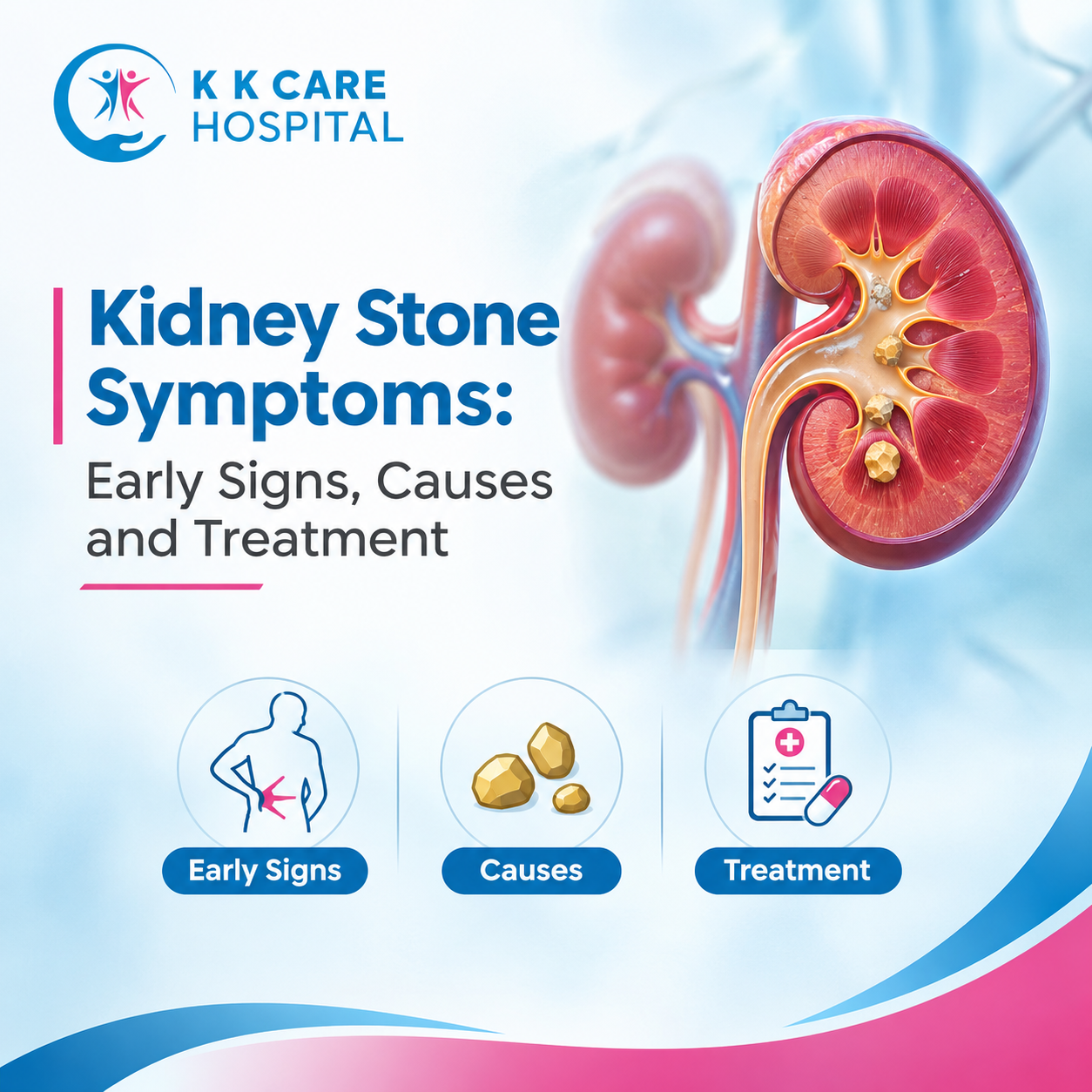
A kidney stone is a hard lump made of minerals and salts that forms inside the kidney. Small stones often leave the body with urine without causing any trouble. Larger stones can block the flow of urine and cause severe pain, blood in urine, nausea or fever.
This guide explains kidney stone symptoms and treatment in simple words. You will learn the early signs, the causes, how doctors confirm a stone, and when you should see a doctor.
Kidney Stone Symptoms and Early Warning Signs
The main kidney stone symptom is pain in the side, back or lower belly that comes in waves. Other common signs are blood in urine, burning while passing urine, nausea and vomiting. Small stones may cause no symptoms until they start to move.
Common symptoms
- Pain on one side of the back, below the ribs, that may spread to the lower belly or groin
- Pain that rises and falls in waves
- Pink, red or brown urine
- Burning or pain while passing urine
- A frequent urge to urinate, often passing only small amounts
- Nausea and vomiting
- Cloudy or foul-smelling urine
Early signs people often miss
Early signs can be mild. You may feel a dull ache on one side of your back, notice slightly dark or pink urine, or feel discomfort while urinating. These signs are easy to blame on muscle strain, gas or a urine infection.
Do not guess the cause. If the same signs keep returning, get them checked.
Emergency warning signs
Some symptoms need urgent care. Go to the nearest emergency department if you have:
- Severe pain that you cannot bear or that makes you unable to sit still
- Pain with fever and chills, which can point to an infection
- Vomiting that does not stop
- Inability to pass urine
- Heavy blood in urine
What Causes Kidney Stones
Urine carries minerals and salts such as calcium, oxalate and uric acid. When there is too much of these and too little water, they can stick together and form crystals. Over months or years, these crystals can grow into stones. This is why the symptoms of kidney stone often appear suddenly, even though the stone has been forming for a long time.
Risk factors
You may be more likely to form stones if you:
- Drink too little water, especially in hot weather or when you sweat a lot
- Eat a lot of salt or animal protein
- Have a family history of kidney stones
- Are overweight or have diabetes, gout or high blood pressure
- Have a blockage in the urinary tract or repeated urine infections
- Have had stomach or intestine surgery
- Take certain medicines or vitamin C supplements
Many Indian meals are high in salt through pickles, papad and packaged snacks. People who work long hours in hot places often drink less water than they need. Both habits can raise the risk.
Types of kidney stones
- Calcium stones are the most common type.
- Uric acid stones can form with a diet high in animal protein.
- Struvite stones are linked to urine infections.
- Cystine stones are rare and run in families.
Knowing the type helps your doctor plan prevention.
How Kidney Stones Are Diagnosed
A doctor will first ask about your symptoms, diet, past stones and medicines. Tests that may be advised include:
- Urine tests to look for blood, infection and crystals
- Blood tests to check kidney function and calcium levels
- Imaging such as ultrasound, X-ray or CT scan, which show the size, position and number of stones
KK Care Hospital has a diagnostic centre in Charholi, so your doctor can discuss which tests suit your case.
Kidney Stone Treatment Options
Treatment depends on the size and position of the stone, your symptoms, any infection, your kidney function and your overall health. There is no single plan that suits everyone.
Small stones
Many small stones pass on their own. As a general guide, stones smaller than 4 mm may pass within one to two weeks, and larger ones may take two to three weeks. During this time, doctors usually advise plenty of fluids and may prescribe medicines for pain, nausea or to help the stone move.
Please do not start painkillers on your own. Some, such as ibuprofen, may not be safe for everyone during a stone attack. If a stone has not passed within four to six weeks, it needs to be reviewed.
Kidney Stone Surgery and Other Procedures
Kidney stone surgery or a procedure may be advised when a stone is too large to pass, blocks the flow of urine, causes repeated infections, or gives pain that medicines cannot control. Common options include:
- Shockwave lithotripsy (ESWL) uses shockwaves from outside the body to break the stone into small pieces.
- Ureteroscopy uses a thin scope passed through the urinary passage to break up or remove the stone, without a cut.
- Percutaneous nephrolithotomy (PCNL) uses a small cut in the back and is usually kept for larger stones.
- Laparoscopic or open surgery is needed only in rare cases.
Your urologist will choose a procedure after reviewing your scans and reports. At KK Care Hospital, the urology department in Charholi sees patients with kidney stones and discusses medical or surgical options based on each person’s case, where clinically appropriate and available.
When Should You See a Doctor
Book a consultation if you have repeated pain on one side of your back, burning while passing urine that does not settle, or any blood in your urine. Blood in urine should always be checked, even if it happens only once.
If you have had a stone before, see a urologist early. Stones can come back. People with diabetes should also mention any urinary symptoms at their regular check-ups.
How to Lower Your Risk of Kidney Stones
Simple daily habits can help, but they are not a guarantee.
- Drink enough water through the day. Pale yellow urine is a good sign. Doctors often advise enough fluids to pass about 2.5 litres of urine a day, but ask your doctor for your own target if you have heart or kidney disease.
- Cut down on salt. Go easy on pickles, papad, chips and instant foods.
- Do not overdo animal protein.
- Eat normal amounts of calcium-rich foods such as milk and curd. Avoid calcium or vitamin C supplements unless your doctor advises them.
- Follow your doctor’s advice on oxalate-rich foods like spinach, nuts and wheat bran if you have calcium stones.
- Keep a healthy weight and control blood pressure and blood sugar.
Frequently Asked Questions
- What are the first symptoms of kidney stone?
The first symptoms are usually a dull or sharp pain in the side or back, blood in the urine and burning while passing urine. Some people also feel nausea. Small stones may cause no kidney stone symptoms at all. - Can kidney stone pain go away on its own?
Pain can ease when a stone moves or passes. But easing of pain does not confirm that the stone is gone. A scan or doctor review can tell you if it has passed or is still blocking urine. - How long does it take to pass a kidney stone?
Stones under 4 mm often pass in one to two weeks, and larger ones may take two to three weeks. If it takes longer than four to six weeks, see a urologist. - When is kidney stone surgery needed?
Surgery or a procedure is considered when the stone is too big to pass, blocks urine flow, causes infection, or keeps causing severe pain. Your urologist decides based on your reports. - Can drinking water prevent kidney stones?
Drinking enough water dilutes urine and lowers the chance of stones forming. It works best along with less salt and a balanced diet. - Which doctor should I see for kidney stone treatment?
A urologist treats kidney stones. In an emergency with severe pain, fever or vomiting, go to a hospital with emergency care without waiting for an appointment.
Do Not Ignore the Symptoms of Kidney Stone
The symptoms of kidney stone can range from no signs at all to severe pain. The good news is that most stones can be treated once they are found. An early check helps you avoid complications.
If you or a family member has side pain, blood in urine or burning while passing urine, consult the urology team at KK Care Hospital, Charholi. Call +91 9657139657 or book an appointment. For severe pain, fever or vomiting, visit the 24/7 emergency department.