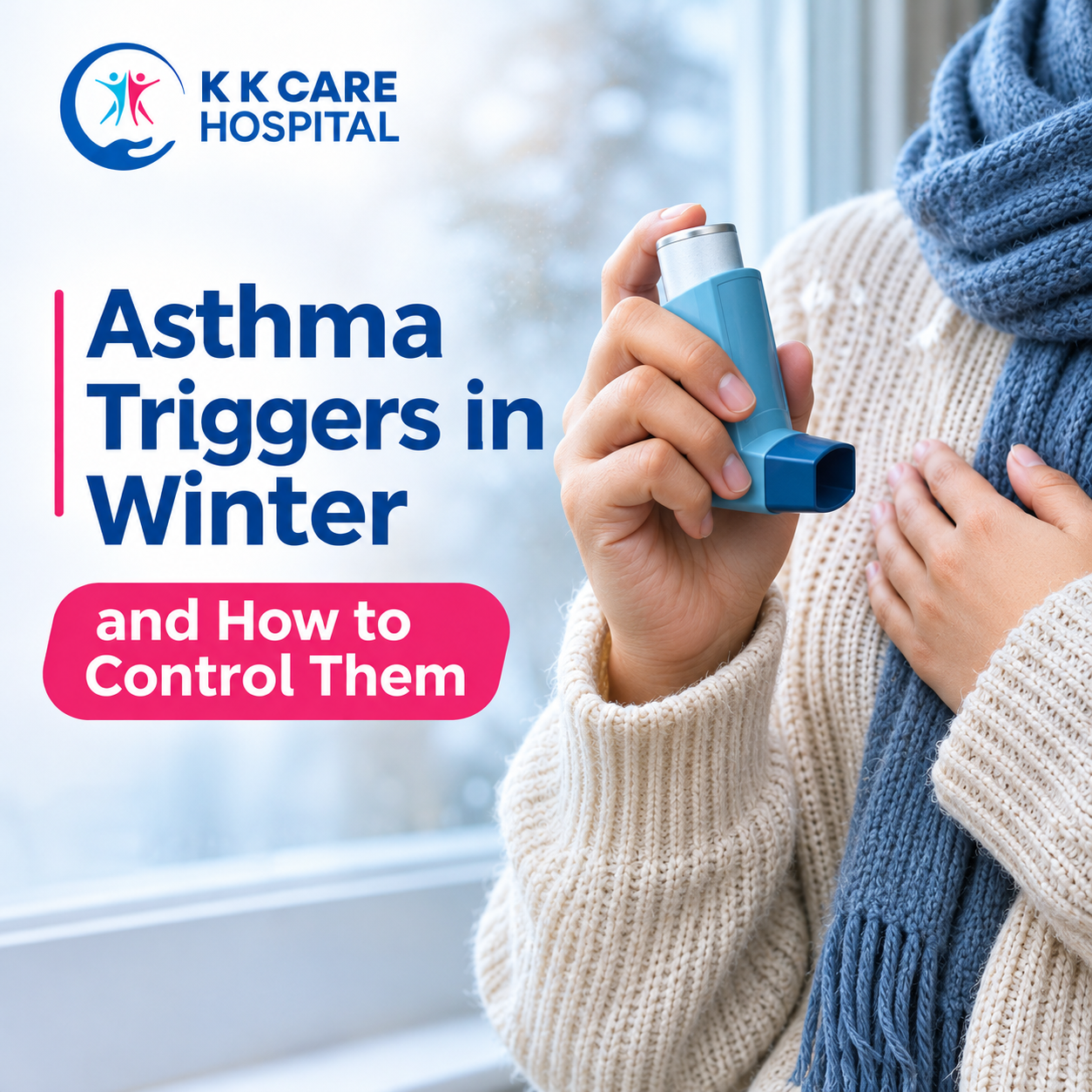
Cold mornings, dry air and closed windows change more than your wardrobe. If you have asthma, winter can also mean more coughing, wheezing or a tight chest. It might start the moment you step outside on a chilly morning, or after an evening in a dusty room.
Cold air, infections, indoor allergens and pollution can all play a part. Once you know which of them affect you, winter becomes much easier to manage.
Why asthma gets worse in winter
Asthma is a long-term condition of the airways. When they are inflamed and sensitive, certain triggers make breathing harder.
Winter adds several at once. Cold, dry air irritates the airways. You spend more time indoors with dust mites and mould. Colds and flu circulate more, and they often hit people with asthma harder. Triggers also differ from person to person, so your own pattern matters more than any general list.
Common asthma triggers in winter
1. Cold and dry air
Breathing cold air, especially early in the morning, can set off coughing, wheezing or chest tightness. Stepping straight from a warm room into the cold can do the same.
Cover your nose and mouth with a scarf before you go out, and breathe through your nose. Give your body a minute to adjust instead of walking out abruptly.
2. Dust mites and indoor allergens
Windows stay shut in winter, so dust mites, mould and pet dander build up indoors. If you are sensitive to them, symptoms can follow.
Wash bedsheets and pillow covers often, and keep rooms clean and dry. Fix damp patches before mould sets in. If dust bothers you, avoid stirring it up while sweeping or cleaning.
3. Colds, flu and other respiratory infections
A cold that is a nuisance for most people can mean days of coughing, wheezing and breathlessness when you have asthma.
Wash your hands regularly and keep your distance from anyone who is unwell. Ask your doctor about vaccinations, including the flu vaccine.
4. Air pollution and smoke
Vehicle emissions, cigarette smoke and cooking fumes can all irritate the airways, and some people react more strongly than others.
Check the local air quality before outdoor plans. Stay away from smoky spaces, ventilate your home, and skip anything that triggers you, such as burning material or strong fragrances.
5. Exercise in cold weather
Exercise is good for you, and asthma does not mean giving it up. Still, breathing fast in cold air sets off symptoms for some people.
Warm up first, pick a suitable time and place, and follow your doctor’s advice on managing exercise-related symptoms.
How to control asthma in winter
Avoiding the cold is not enough. What protects you is a steady routine.
- Keep taking your prescribed medication as directed, even when you feel fine. Do not stop or change it without medical advice.
- Check your inhaler technique with your doctor or pharmacist, and ask whether you need a spacer. If the technique is off, less medicine reaches your lungs.
- Note down when you cough, wheeze or feel breathless. A simple symptom diary helps your doctor spot triggers.
- Keep your home dry, dust-free and well aired, and wash bedding regularly.
- Dress warmly and cover your nose and mouth in cold air.
- Keep your reliever inhaler within reach, and know what to do if symptoms get worse.
Your doctor may also give you a written asthma action plan that says how to handle flare-ups and when to get help.
Winter asthma symptoms you should not ignore
Pay attention if you notice any of these:
- Frequent coughing, especially at night or early in the morning
- Wheezing or a whistling sound when you breathe
- Chest tightness or discomfort
- Breathlessness during routine activities
- Waking at night with a cough or trouble breathing
- Using your reliever inhaler more often than usual
If these become more frequent, disturb your sleep or get in the way of daily life, see a doctor. Recurring breathing trouble is not just “winter”.
When asthma becomes an emergency
Get emergency care immediately if you have severe difficulty breathing, cannot speak in full sentences, have blue or grey lips, feel confused, or your reliever medication does not help. Follow your emergency asthma action plan and do not wait.
When to see an asthma specialist
If symptoms keep coming back every winter, or your current treatment is not keeping them in check, see a asthma specialist. The doctor will review your symptoms and medical history and look for your triggers.
Depending on your case, you may be advised to have spirometry, pulmonary function testing or allergy testing. Treatment can then be planned around your age, symptoms and health needs.
Asthma care at KK Care Hospital, Charholi
At KK Care Hospital in Charholi, you can consult Dr. Mahavir Bagrecha (MBBS, MD Chest), an interventional pulmonologist, for asthma and allergy-related problems. The hospital offers respiratory care, including pulmonary function testing, spirometry, allergy testing and inhaler management.
If you or your child has breathing problems that return every winter, an early check-up can tell you what is behind them and what to do about it.
Book a consultation with Dr. Mahavir Bagrecha at KK Care Hospital to get a clear winter asthma plan.