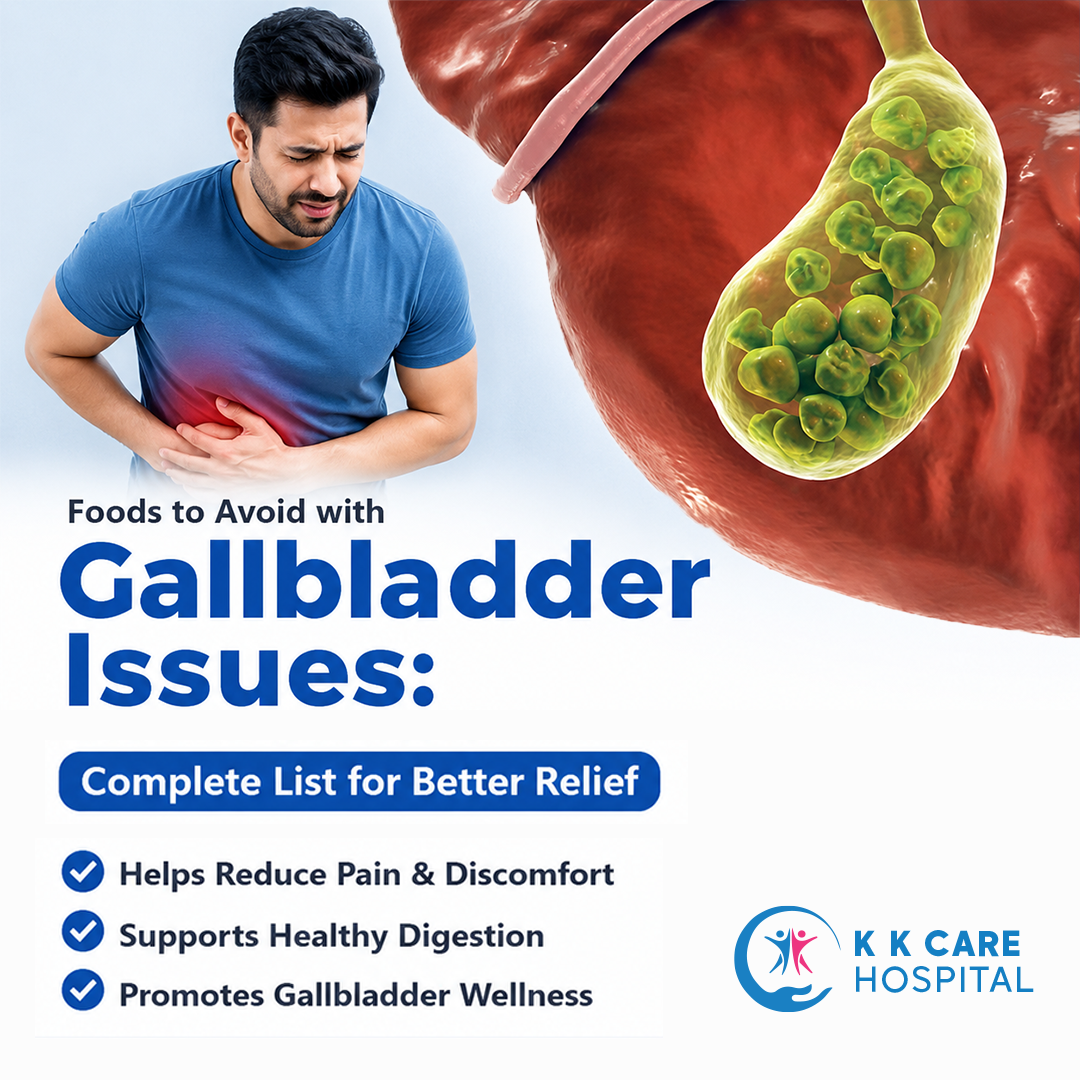
You finally sit down for a meal — dal, sabzi, a couple of rotis — and 30 minutes later, there it is. That sharp, cramping pain under your right ribs. Your gallbladder, making itself known again.
If you’ve been told you have gallstones or a gallbladder problem, you’ve probably heard the advice to “eat light.” But what does that actually mean? Which foods are the real triggers? And is your evening chai making things worse?
This guide gives you a clear, honest list of foods to avoid with gallbladder issues — broken down by category, with real Indian food examples you’ll actually recognise.
Why What You Eat Matters So Much
Your gallbladder holds bile — a fluid your liver makes to help digest fat. Every time you eat something fatty, your gallbladder squeezes to release that bile into your intestine.
In a healthy gallbladder, that’s fine. But if you have gallstones or gallbladder inflammation, those contractions can be intensely painful. Fatty, fried, and cholesterol-heavy foods are the most common triggers — and for many people, one bad meal is all it takes to land in the emergency room.
The good news: simple, consistent dietary changes can dramatically reduce how often attacks happen.
Foods That Cause Gallbladder Pain — By Category
1. Fried and Fatty Foods (The Biggest Triggers)
No surprise here. Fried foods demand the most bile, making your gallbladder work hardest.
Cut down on or avoid:
- Deep-fried snacks — samosas, pakoras, vada, bhajis
- French fries, chips, fried rice from restaurants
- Puri and bhatura
- Anything cooked in large amounts of ghee or dalda
- Cream-based curries and gravies
Even one heavy, oily meal can trigger an attack within an hour. If you’re in a flare-up, these foods should be off the plate entirely.
2. Foods to Avoid with Gallstones: High-Cholesterol and Processed Meats
Most gallstones are made of cholesterol. So logically, eating foods high in cholesterol speeds up stone formation and makes existing stones more painful.
Reduce or eliminate:
- Red meat — mutton, beef, pork
- Organ meats — liver, brain, kidney
- Processed meats — sausage, salami, keema in large amounts
- Full-fat paneer (small portions of low-fat paneer are usually okay)
- Egg yolks — limit to 2–3 per week if symptomatic
If you’ve been told your gallstones are cholesterol-based, our gastroenterology team can guide you on dietary management vs. surgical options.
3. Refined Carbohydrates and Sugar
This one surprises people. Sugar and refined carbs raise triglycerides in the blood — and high triglycerides increase the cholesterol concentration in bile, which directly contributes to stone formation.
Watch out for:
- Maida-based foods — white bread, naan, biscuits, pastries
- Indian sweets — gulab jamun, rasgulla, barfi, halwa (occasional small portions may be fine)
- Packaged breakfast cereals, instant noodles, ready-to-eat snacks
- Sugary drinks and sodas
- Large portions of white rice daily
Switching to whole grains — jowar roti, brown rice, oats — makes a noticeable difference over time.
4. Gallbladder Vegetables to Avoid
Most vegetables are actually good for your gallbladder. High-fibre vegetables reduce bile cholesterol and support healthy digestion. But a few can cause bloating and abdominal pressure — which worsens pain when your gallbladder is already inflamed.
Use caution with (especially during a flare-up):
- Cauliflower and cabbage — gas-producing, can increase internal pressure
- Radish (mooli) — stimulates bile flow; fine long-term but avoid during active pain
- Raw onion and raw garlic — bloating in sensitive stomachs
- Brussels sprouts and broccoli — high-sulphur; some patients report worsening gas
Important: these aren’t forever bans. Once inflammation settles, most of these vegetables are fine in cooked, moderate portions — and fibre from vegetables is actually protective against new stone formation.
5. Drinks to Avoid with Gallbladder Issues
Beverages often fly under the radar, but the wrong drinks can quietly worsen your condition.
Avoid:
- Alcohol — disrupts liver-bile production and increases inflammation
- Full-fat milk, cream-heavy teas and coffees — the fat content triggers bile release
- Sweetened cold drinks and sodas — high sugar, gas-forming
- Packaged fruit juices — often high in sugar, low in real fibre
Can Energy Drinks Cause Gallstones?
Yes — indirectly, and more than most people realise. Energy drinks combine high sugar, artificial additives, and large doses of caffeine. Regular sugar raises blood triglycerides, which increases cholesterol in bile. Caffeine in large quantities stimulates the gallbladder to contract. Together, frequent energy drink consumption can contribute to stone formation over time. If you already have gallbladder issues, it’s best to avoid them completely.
Quick Reference: Gallbladder Foods to Avoid
| Category | Avoid or Reduce |
| Fats & Oils | Ghee in excess, dalda, deep-fried anything |
| Meats | Mutton, organ meats, processed meats |
| Dairy | Full-fat milk, cream gravies, excess paneer |
| Refined Carbs | Maida, white bread, mithai, sugary drinks |
| Vegetables | Raw onion, radish, cauliflower during flare-ups |
| Drinks | Alcohol, energy drinks, cold drinks, cream chai |
What to Eat Instead
You don’t need to eat boring food. Focus on:
- Lean proteins: moong dal, masoor dal, tofu, skinless chicken
- High-fibre carbs: jowar roti, brown rice, oats, whole wheat
- Cooked vegetables: spinach, bottle gourd (lauki), carrots, beetroot
- Light cooking methods: steaming, boiling, shallow frying in minimal oil
- Water: 8–10 glasses daily helps thin bile and reduces stone risk
When Diet Isn’t Enough
Dietary changes are powerful — but they’re not a cure for gallstones. If you experience any of the following, please don’t wait:
- Severe pain lasting more than 2 hours
- Fever, chills, or sweating with the pain
- Yellowing of skin or eyes (jaundice)
- Persistent nausea or vomiting
These symptoms may indicate a blocked bile duct or acute cholecystitis — conditions that need prompt medical attention. Our general surgery and laparoscopy team at KK Care Hospital performs minimally invasive gallbladder surgery with fast recovery and same-day consultation.
Conclusion:
Gallbladder issues don’t mean giving up good food forever. It means being a little more intentional — cutting the deep-fried, the overly rich, the sugary — and giving your gallbladder less reason to protest.
Start with the biggest offenders: fried foods, fatty meats, and refined carbs. Watch your drinks as closely as your meals. And don’t ignore the pain if it keeps coming back — diet manages symptoms, but a proper diagnosis changes everything.
If you’re in Pune and tired of managing this on your own, the team at KK Care Hospital is here to help — from diagnosis to recovery, every step of the way.
Frequently Asked Questions
Q: What’s the single worst food for gallbladder pain?
Fried foods are consistently the biggest trigger — they require the most bile to digest and cause the strongest gallbladder contractions. Samosas, pakoras, puri before a flare are the most common culprits we see in patients.
Q: Can I eat eggs with gallbladder problems?
Egg whites are generally safe. Yolks are cholesterol-heavy — limit to 2–3 yolks per week if you’re symptomatic.
Q: Is spicy food bad for the gallbladder?
Spice alone isn’t the issue. The problem is that spicy food is almost always cooked in oil — the fat is the real trigger. A plain spicy dal is very different from a spicy butter chicken.
Q: Can energy drinks cause gallstones?
Regular energy drink consumption can contribute to gallstone formation through high sugar, elevated triglycerides, and caffeine-driven gallbladder stimulation. If you have gallbladder issues, avoid them.
Q: Should I go completely fat-free?
No. A very low-fat diet can actually slow bile flow and increase stone risk. The goal is reducing saturated and trans fats, not all fats. Small amounts of healthy fats — from nuts, seeds, and olive oil — are fine and actually helpful.
Q: How soon will I feel better after changing my diet?
Most patients notice fewer attacks within 2–4 weeks of consistent changes. Diet manages symptoms — it doesn’t dissolve existing stones.