A heart attack is one of the most frightening medical events a person can experience — but the journey doesn’t end in the emergency room. With the right care and guidance, heart attack recovery is a structured, achievable process. Knowing what to expect after a heart attack, week by week, helps you and your family move forward with clarity and confidence.
What Is the Heart Attack Recovery Timeline?
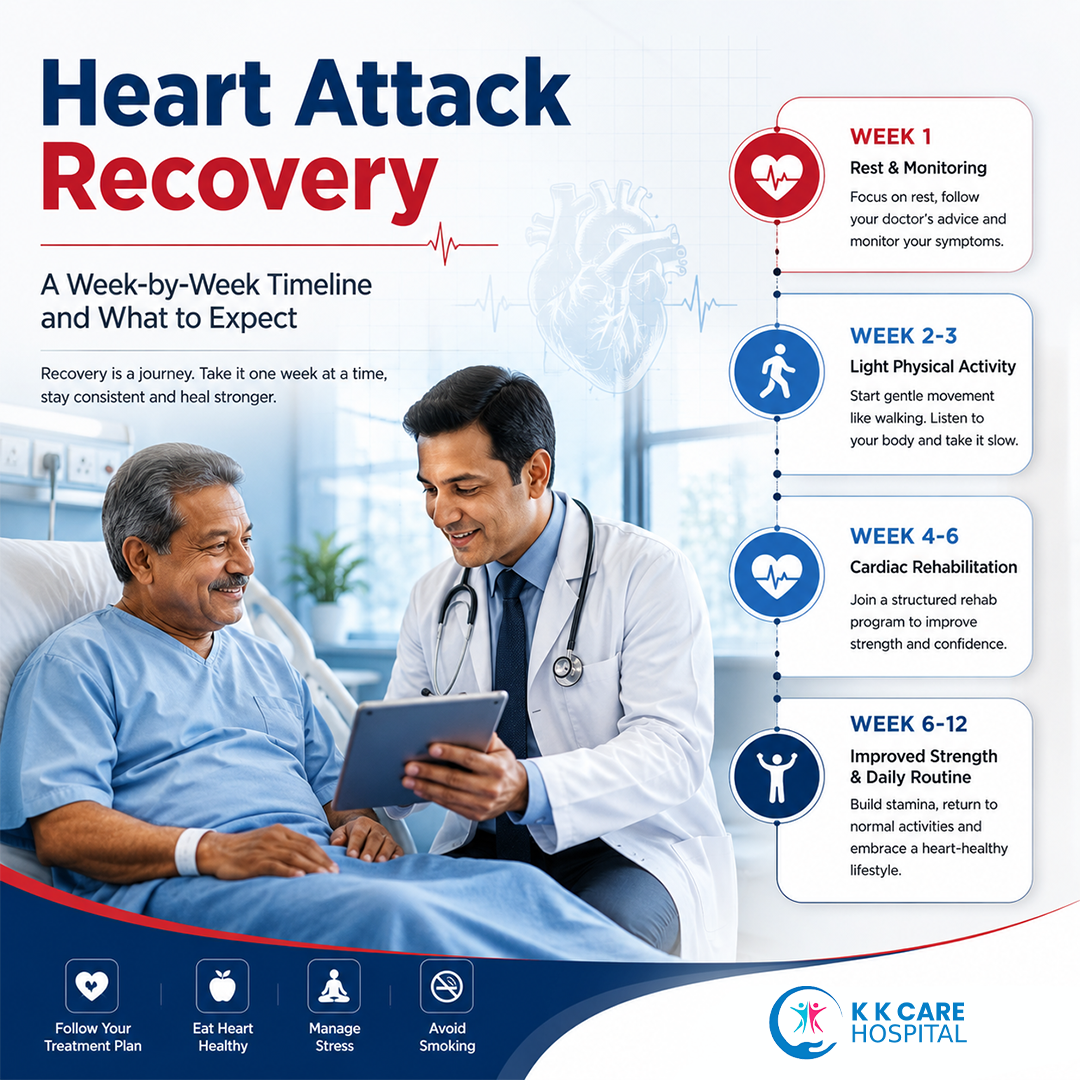
Recovery is not a single moment — it’s a phased process spanning weeks and months. The heart attack recovery timeline varies based on the severity of the attack, the speed of treatment, and how consistently the patient follows post-discharge care. Most patients progress through four distinct phases.
Week 1–2: Hospital Discharge and Complete Rest
In the first two weeks, the focus of recovery after a heart attack is simple: protect the healing heart muscle and avoid any strain.
After discharge (typically 3–5 days post-event), patients should:
- Rest completely — short, slow walks around the home are the limit
- Take all prescribed medications without interruption (aspirin, beta-blockers, statins, ACE inhibitors)
- Monitor for warning signs: chest pain, breathlessness, swollen legs, irregular heartbeat
- Avoid lifting anything over 5 kg, driving, or stressful activity
Emotional symptoms — anxiety, fear, low mood — are common in this phase and are a normal part of recovery. They should be reported to your doctor, not ignored.
At KK Care Hospital, our Cardiology department provides structured post-discharge plans so patients leave with clear instructions, not confusion.
Week 3–6: Supervised Rehabilitation Begins
This is the most critical window in the heart attack recovery timeline. Patients who begin supervised cardiac rehabilitation in this phase have measurably better long-term outcomes.
Cardiac rehab in this phase includes:
- Monitored, graded physical activity — beginning with assisted walking
- Nutritional counselling focused on a heart-protective diet
- Medication review and adjustment
- Stress reduction education
Most sedentary workers receive clearance to return to work between weeks 4–6. Physical labourers require longer — often 3–6 months.
Milestone to track: Walking 20–30 minutes at a moderate pace without chest pain or breathlessness by the end of week 6.
Our Physiotherapy and Rehabilitation team at KK Care Hospital guides cardiac patients through this phase with supervised exercise protocols and progress monitoring.
Week 7–12: Building Functional Strength
By this stage of recovery after a heart attack, most patients report a noticeable improvement in energy and confidence. Key developments in this phase:
- Cardiology follow-up with echocardiogram or stress test to assess ejection fraction
- Return to driving (subject to cardiologist clearance)
- Moderate exercise 3–5 times per week
- Active management of risk factors — blood pressure, cholesterol, blood sugar
This is also the phase where many patients plateau without structure. Continuing rehabilitation and keeping all follow-up appointments is essential — not optional.
Months 3–6: Long-Term Cardiac Adaptation
How to recover from a heart attack in the long term is less about rest and more about permanent lifestyle change. By months 3–6, the focus shifts to:
- Sustaining a heart-healthy diet (Mediterranean-style eating is best-evidenced)
- Daily physical activity as a non-negotiable habit
- Ongoing diabetes and hypertension management — both are major drivers of re-events
- Addressing post-MI depression, which affects up to 1 in 3 survivors and significantly increases second heart attack risk if untreated
Full functional recovery — including travel, moderate exercise, and normal social life — is achievable for the majority of patients who adhere to this phase.
5 Non-Negotiables for Heart Attack Recovery
How to recover from a heart attack comes down to disciplined execution of five fundamentals:
- Never stop medications without doctor approval — premature discontinuation is a leading cause of second events
- Complete your cardiac rehabilitation programme — reduces rehospitalisation risk by up to 30%
- Eat to protect your heart — reduce salt, saturated fat, and refined carbohydrates; increase fibre, vegetables, and omega-3s
- Move every day — even a 20-minute daily walk produces measurable cardiac benefit
- Treat depression as a medical issue — not a willpower issue
Start Your Recovery with Specialist Cardiac Care in Charholi
Heart attack recovery outcomes are directly tied to the quality of post-discharge care. At KK Care Hospital, Charholi, our Cardiology specialists and Physiotherapy and Rehabilitation team work together to guide cardiac patients from discharge through full functional recovery.
FAQ: What to Expect After a Heart Attack
Q: How long does heart attack recovery take?
A: Most patients reach functional recovery within 6–8 weeks. Full cardiac and emotional recovery typically takes 6–12 months depending on severity and rehabilitation adherence.
Q: Can the heart fully recover after a heart attack?
A: Damaged muscle does not regenerate, but the heart adapts. With proper treatment and lifestyle management, the vast majority of patients live full, active lives post-recovery.
Q: When can I return to work after a heart attack?
A: Desk-based jobs: 4–6 weeks. Manual or physically demanding roles: 3–6 months minimum. Formal clearance from your cardiologist is required before returning.
Q: Is depression after a heart attack normal?
A: Yes. Post-MI depression is a recognised medical condition affecting up to 33% of survivors. It doubles re-event risk if untreated. Speak to your doctor — it responds well to treatment.
Q: What warning signs during recovery need immediate attention?
A: During recovery after a heart attack, go to emergency immediately if you notice Chest pain or pressure, sudden shortness of breath, swelling in the legs or ankles, a rapid or irregular heartbeat, dizziness, or fainting.