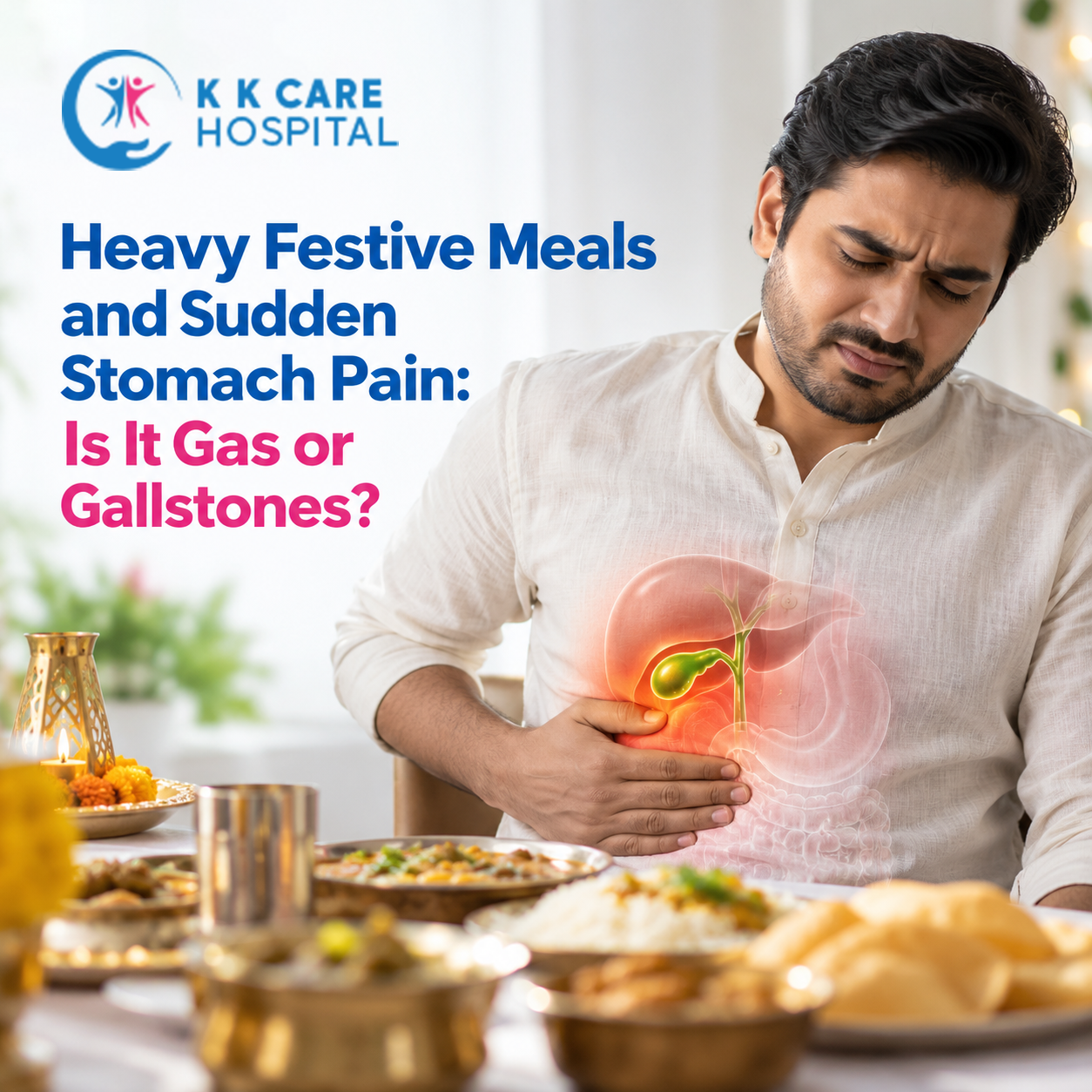
Diwali sweets, ghee-rich thalis, fried snacks, and a second helping of biryani because it is a celebration. Then, a few hours later, a sharp pain grips your upper belly and will not let go. Is it just gas? Or is it your gallbladder?
Many families in Pune and Pimpri Chinchwad face this scare every festive season. Sudden stomach pain after eating is common, and most of the time it is harmless. Sometimes, though, it is gallstones pain, and that needs a doctor’s attention. This guide helps you spot the difference.
What Gallstones Are and Why Rich Meals Trigger Them
Your gallbladder is a small pouch tucked under the liver on the right side of your belly. It stores bile, a fluid that helps you digest fat. After a fatty meal, the gallbladder squeezes bile into the intestine.
Gallstones are hard lumps that form from bile. They can be as small as a grain of sand or as big as a golf ball. Many people have them and never feel a thing. Pain starts when a stone blocks the bile flow just as the gallbladder squeezes. Eating a fatty meal stimulates the gallbladder to contract and release bile. If a gallstone blocks the flow of bile, this contraction may trigger pain. However, not everyone who experiences discomfort after a rich meal has gallstones.
Want the basics first? Read our guide on gallbladder stones, causes, risk factors and symptoms.
Gallstones Pain Symptoms to Watch For
Doctors call a typical gallstone attack biliary colic. It usually looks like this:
- Pain in the upper right belly, or in the middle just below the breastbone
- Pain that starts within an hour or two of a fatty meal, often at night
- A steady ache that builds for 15 to 30 minutes and can last for hours
- Pain that spreads to the right shoulder blade or back
- Nausea or vomiting
Gall Bladder Symptoms After Eating That Are Easy to Miss
Not every attack is dramatic. Some people only notice fullness, burping, or a heavy feeling after oily food. Because these milder gall bladder symptoms after eating look like acidity, they get ignored for months.
Can a Bad Gallbladder Cause Bloating
Bloating and indigestion may occur in people with gallstones, but these symptoms are also common in other digestive conditions. Bloating alone does not confirm gallbladder disease. If you experience recurring upper abdominal pain after fatty meals, consult a doctor for an assessment.
Here is the honest part, though. Bloating alone does not prove gallstones. Gallstones bloating and gas feel very similar to indigestion, acidity, or irritable bowel syndrome. The clue is the pattern. If bloating comes with repeated upper right belly pain after fatty meals, your gallbladder moves higher up the suspect list.
Gas Pain vs Gallstones Pain
Use this table as a general guide, not a diagnosis. Gas pain and gallstones pain can overlap with symptoms of other conditions. If abdominal pain is severe, persistent or recurrent, seek medical advice rather than relying on these patterns to identify its cause.
| Gas pain | Gallstones pain | |
| Where | Anywhere in the belly, moves around | Upper right or upper middle belly |
| Feels like | Cramps that come and go in waves | Steady, building ache |
| Relief | Eases after burping or passing gas | Does not ease with burping or passing gas |
| Lasts | Minutes to an hour | 30 minutes to several hours |
| Trigger | Any food, fizzy drinks | Fatty, fried, or very rich meals |
| Other signs | Rumbling, mild bloating | Nausea, sweating, pain near the right shoulder blade |
Why Festive Food Sets Off Sudden Stomach Pain After Eating
Festivals pile several triggers into one week. Ghee, fried snacks, and mithai add a big load of fat in one sitting.Prolonged fasting and rapid weight loss can affect gallbladder emptying and increase the risk of gallstone formation in some people. Returning to regular, balanced meals after fasting may also help reduce digestive discomfort. Late dinners make it worse because you lie down soon after eating.
Gallstones are not the only cause. Acid reflux, gastritis, an ulcer, food poisoning, and pancreatitis can all cause sudden stomach pain after eating. Gallstones are more likely if you are a woman, are over 40, are overweight, are pregnant, live with diabetes, or have a family history of stones. Crash dieting raises the risk too.
When to See a Doctor
Book a consultation if you get repeated pain after fatty meals, even when it settles on its own.
Seek urgent medical assessment if you have:
- Severe or persistent abdominal pain, particularly pain lasting several hours
- Fever or chills with abdominal pain
- Yellowing of the skin or eyes
- Dark urine or unusually pale stools
- Repeated vomiting or difficulty keeping fluids down
Do not wait for a specific number of hours if the pain is severe or worsening..
How Gallstones Are Diagnosed
Your doctor will ask when the pain comes, how long it lasts, and what you ate. After examining your belly, the usual tests are:
- Abdominal ultrasound. A painless scan and the main test for finding stones.
- Blood tests. These check your liver, pancreas, and signs of infection.
- Further scans. MRCP, CT, or a HIDA scan are used if the picture is unclear.
You can get these tests at our diagnostic centre in Charholi.
Treatment Options for Gallstones
Stones that cause no symptoms often need no treatment, only monitoring. If you have repeated attacks, your doctor may advise removing the gallbladder. This is usually done by laparoscopic (keyhole) surgery through small cuts. The hospital stay and recovery period vary depending on the patient’s condition, the procedure and whether complications are present.You can live a normal life without a gallbladder.
Medicines rarely dissolve stones reliably, and online “liver flush” remedies are unproven and can be unsafe. Our general and laparoscopic surgeon and gastroenterologist can guide you on the right next step once you have had an ultrasound.
How to Protect Your Gallbladder This Festive Season
- Eat smaller portions and spread sweets and fried snacks across the day
- Break a fast with a light meal, not a heavy feast
- Fill half your plate with vegetables, dal, and salad
- Take a 10 to 15 minute walk after dinner
- Avoid crash diets and rapid weight loss
- Do not keep taking painkillers to push through repeated pain
Frequently Asked Questions About Gallstones Pain
1. Can gallstones cause gas and bloating?
Gallstones may occur alongside bloating and indigestion, but these symptoms alone do not confirm gallstones. Repeated upper abdominal pain needs medical evaluation.
2. How long does gallstones pain last?
A gallbladder attack may last from around 30 minutes to several hours. Severe or persistent pain requires prompt medical assessment.
3. Can a fatty meal trigger gallbladder pain?
Yes. A fatty meal can trigger an attack in someone who already has gallstones because the gallbladder contracts to release bile.
4. Can gallstones go away without surgery?
Gallstones without symptoms may only need monitoring. Symptomatic gallstones often require surgery, depending on the doctor’s assessment.
5. Which doctor should I consult for gallstones?
Consult a general or laparoscopic surgeon or a gastroenterologist for an assessment of suspected gallstones.
Medical disclaimer: This article is for educational purposes only and is not a substitute for professional medical advice, diagnosis, or treatment. Always talk to a qualified doctor about your symptoms.