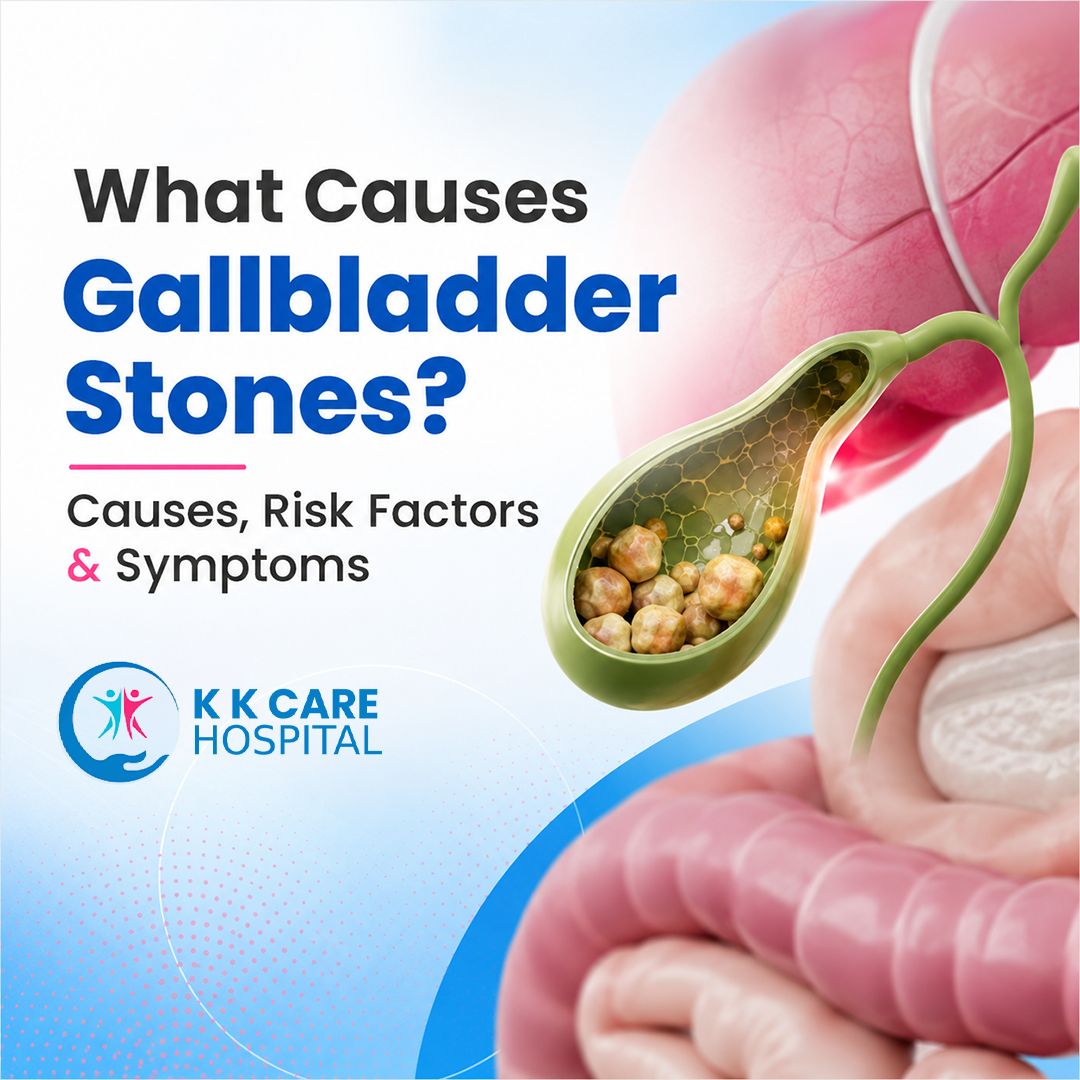
Gallstones form inside the gallbladder, the small pouch under your liver that stores bile. Most people don’t know they have one until it blocks a duct and the pain starts. Here’s what actually causes gallstones, who’s more likely to get them, and how to tell if what you’re feeling is a gallstone attack.
What Causes Gallstones
Bile carries cholesterol, bile salts, and a waste product called bilirubin. Gallstones form when that mix falls out of balance.
Too much cholesterol in bile. If your liver puts out more cholesterol than the bile salts can dissolve, the extra cholesterol crystallizes. Over months, those crystals clump into stones. This is the reason behind most gallstones diagnosed in India and the West alike.
Too much bilirubin. Conditions like liver cirrhosis, certain infections, and blood disorders that break down red blood cells faster than normal can flood the bile with bilirubin, forming pigment stones.
A gallbladder that doesn’t empty properly. If the gallbladder doesn’t contract and drain fully, bile sits and concentrates, giving crystals more time to grow into stones. Pregnancy, rapid weight loss, and long stretches of fasting all slow this emptying down.
Risk Factors for Gallbladder Stones
Some of these you can change, some you can’t:
- Being female — estrogen increases cholesterol in bile
- Age over 40
- Being overweight, or losing weight very quickly through crash dieting or bariatric surgery
- A diet high in refined carbs and saturated fat, low in fiber
- Family history of gallstones
- Diabetes and metabolic syndrome
- Certain medications, including hormone therapy and some cholesterol drugs
Gallbladder Stones Symptoms
Many gallstones sit quietly and never cause a problem — these are usually found by accident on a scan done for something else. Symptoms show up when a stone blocks a bile duct.
Common stone in gallbladder symptoms include:
- Sudden, intense pain in the upper right or center of the abdomen, often after a fatty meal
- Pain that spreads to the right shoulder or between the shoulder blades
- Nausea or vomiting during an attack
- Bloating and indigestion after eating rich food
- Yellowing of the skin or eyes (jaundice) if a duct stays blocked
- Fever with chills, which can signal an infection and needs urgent care
An attack usually lasts anywhere from 30 minutes to a few hours. If the pain doesn’t ease, or you develop fever and jaundice together, that’s an emergency, not a wait-and-see situation.
Foods to Eat for Gallbladder Stones
Diet won’t dissolve an existing stone, but the right foods reduce how often the gallbladder is triggered and support liver and bile function. A high fiber diet is one of the simplest changes that helps here:
- High-fiber foods — oats, whole grains, lentils, vegetables
- Healthy fats in moderation — olive oil, nuts, fatty fish
- Fresh fruits, especially those high in vitamin C
- Plenty of water through the day
- Smaller, more frequent meals instead of large, fatty ones
Foods to cut back on: deep-fried food, red meat, full-fat dairy, and refined sugar — all known to trigger attacks in people who already have stones. If bloating or indigestion is a regular issue alongside your gallbladder symptoms, our guide on maintaining gut health covers habits that support digestion more broadly.
When to See a Doctor
If you get repeated pain after meals, especially fatty ones, don’t wait it out. An ultrasound takes minutes and gives a clear answer. Left untreated, a blocked duct can lead to gallbladder infection or pancreatitis, both of which are harder to treat than a straightforward gallstone. Our gastroenterology team handles gallstone diagnosis and treatment regularly, including Dr. Shrikant Kurhade, who specializes in laparoscopic gallbladder stone surgery.
Think You Might Have a Gallstone?
Don’t self-diagnose off a symptom list. Book an ultrasound and consultation with our gastroenterology team at KK Care Hospital — get a clear answer and a treatment plan in one visit.
FAQs on Gallbladder Stones
Q: What is the main reason for gallbladder stones?
A: Most cases come down to excess cholesterol in bile that crystallizes over time. Poor gallbladder emptying and high bilirubin levels are the other two main pathways.
Q: Can gallstones go away without treatment?
A: Small, silent stones sometimes stay small and cause no issues for years. But stones don’t dissolve on their own once symptoms start — at that point, treatment is usually needed.
Q: Is surgery always required for gallstones?
A: No. If stones are silent and small, doctors often just monitor them. Surgery (cholecystectomy) is recommended when stones cause repeated pain, infection, or blockage.
Q: Can diet alone prevent gallstones?
A: Diet lowers your risk and reduces flare-ups but can’t guarantee prevention, especially if family history or a medical condition is driving stone formation.
Q: Are gallbladder stones more common in women?
A: Yes. Estrogen raises cholesterol levels in bile, which is part of why women — particularly during or after pregnancy — are more likely to develop stones than men.