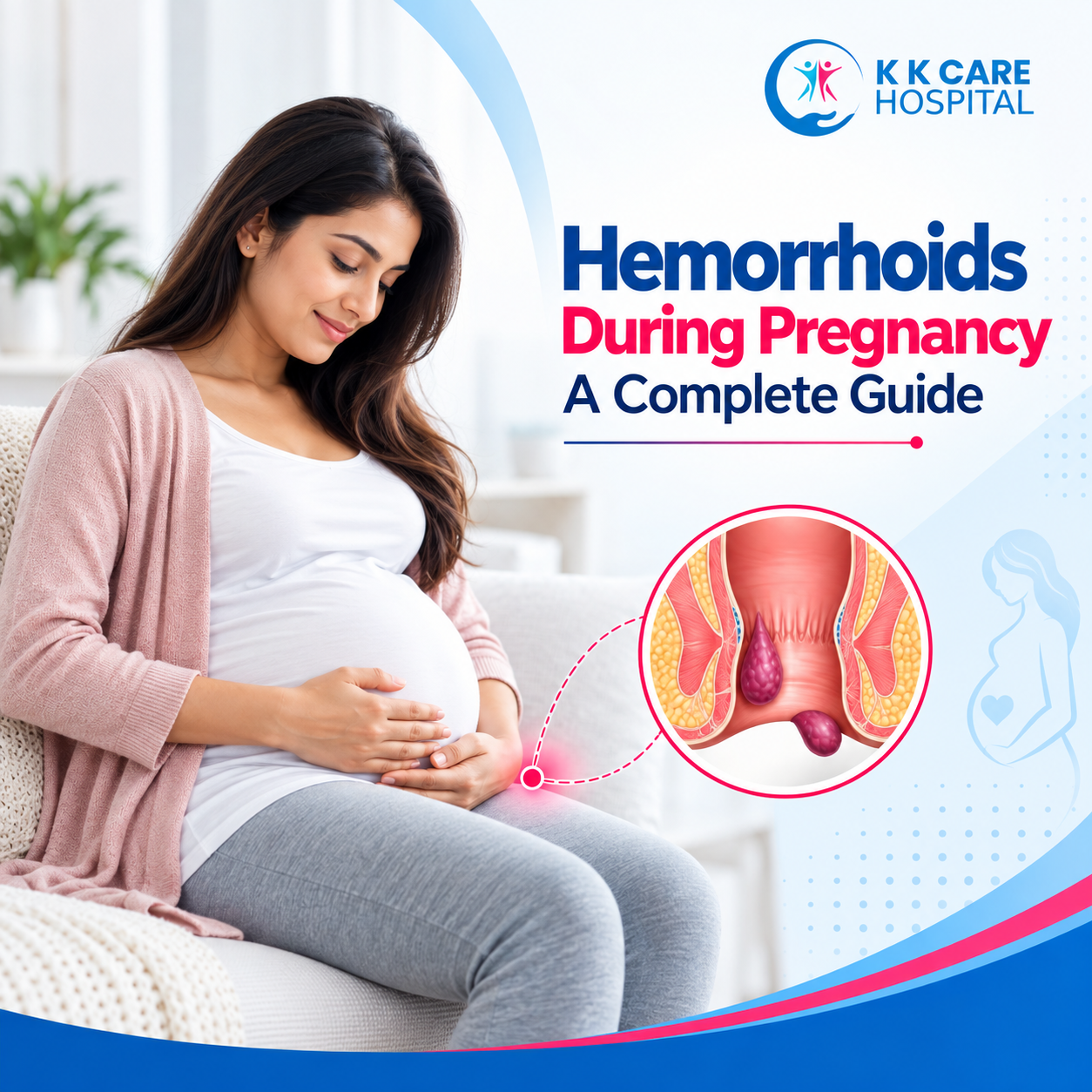
Hemorrhoids during pregnancy are swollen veins in and around the anus, and they affect up to half of pregnant women, most often in the third trimester, according to the U.S. Office on Women’s Health. If you’ve noticed itching, a small lump, or blood on the toilet paper, you’re dealing with one of the most common and least talked-about parts of pregnancy, not something unusual or serious on its own.
Many women don’t mention it to their gynaecologist out of embarrassment and just put up with it. You don’t have to. Pregnancy hemorrhoids usually respond well to simple, baby-safe care at home. Here’s why they happen, what actually helps, and when it’s time to see a proctology specialist.
What Are Hemorrhoids in Pregnancy
Hemorrhoids, also called piles, are swollen blood vessels in the lower rectum and around the anus. Everyone has these vessels; they only become a problem when they enlarge, get inflamed, or bleed.
- Internal hemorrhoids sit inside the rectum. They’re usually painless but can cause bright red blood on toilet paper or in the bowl.
- External hemorrhoids form under the skin around the anus. They itch, swell, and hurt, especially when sitting.
Why Hemorrhoids in Pregnancy Are So Common
Several things happen in your body at once during pregnancy, and each one adds pressure to the same set of veins.
- Pressure from the growing uterus. As the baby grows, the uterus presses on pelvic veins and slows blood flow from the lower body, which makes the veins near the rectum swell.
- Increased blood volume. Pregnancy increases total blood volume, adding pressure to veins that are already stretched.
- Hormonal changes. Progesterone relaxes vein walls, making them swell more easily, and slows digestion.
- Constipation. Slower digestion, iron supplements, and reduced activity often lead to hard stools. Straining on the toilet is one of the biggest triggers for piles during pregnancy.
- Labour itself. Pushing during vaginal delivery puts intense pressure on the area, which is why many women first notice a pregnancy hemorrhoid right after giving birth.
Why Treating Piles During Pregnancy Early Matters
A small, itchy hemorrhoid left untreated can grow larger and more painful as constipation and straining continue. Waiting also raises the risk of a thrombosed hemorrhoid, a blood clot that causes sudden, severe pain.
Treating piles before labour tends to make delivery and postpartum recovery more comfortable. An exam also rules out anal fissures, which are common during and after pregnancy and need different care. Early treatment protects something simple: your ability to sit, sleep, and walk comfortably for the rest of the pregnancy.
Safe Piles Treatment in Pregnancy You Can Start Today
Check with your doctor before using any medicine or cream, but these steps are generally considered safe:
- Eat more fibre. Whole grains, dal, fruits, leafy vegetables, and soaked figs keep stools soft.
- Drink plenty of water. Aim for 8 to 10 glasses a day. Coconut water and buttermilk help too.
- Don’t strain. Go when you feel the urge, and don’t sit on the toilet for long stretches.
- Take a warm sitz bath. Soak for 10 to 15 minutes, two to three times a day, to ease itching and pain.
- Use cold compresses. A wrapped ice pack reduces swelling.
- Keep the area clean. Plain water or unscented wipes, patted dry gently.
- Rest on your left side. This takes pressure off the pelvic veins.
- Stay gently active. Walking and Kegel exercises support digestion and circulation.
- Ask about safe medicines. Your doctor may suggest a pregnancy-safe stool softener or soothing cream. Don’t self-medicate.
When to See a Doctor for Piles in Pregnancy
Home care resolves most cases, but see a doctor if you notice rectal bleeding, severe pain, a hard lump, or symptoms that last more than a week despite home treatment. These signs don’t always mean something serious, but they need an exam to rule out complications like a thrombosed hemorrhoid or an anal fissure.
Get Gentle Pregnancy-Safe Care at KK Care Hospital
At KK Care Hospital, you’ll be seen by Dr. Shrikant Kurhade, a Consultant Laparoscopic Gastrointestinal & Laser Piles Surgeon with more than 15 years of experience and 8,000+ patients treated. He holds MBBS, MS, FNB, FIAGES, FMAS, and FALS (Robotic Surgery) qualifications and treats piles, fissures, fistula, and other anorectal conditions, using advanced laser techniques when a procedure is needed.
For expecting mothers, the approach is conservative and baby-safe: a private, respectful examination, a clear diagnosis, and a treatment plan suited to your stage of pregnancy. If a procedure is ever needed, Dr. Kurhade will guide you on the safest timing, usually after delivery.
Book a consultation with Dr.Shrikant Kurhade at KK Care Hospital and take the first step toward comfort.
FAQs
Q: What is the fastest way to get rid of hemorrhoids during pregnancy?
A: There’s no overnight fix, but warm sitz baths, cold compresses, a high-fibre diet, plenty of water, and avoiding straining usually bring relief within a few days. Your doctor may also suggest a pregnancy-safe cream or stool softener.
Q: Are hemorrhoids during pregnancy harmful to my baby?
A: No. Hemorrhoids affect the veins around your rectum and don’t harm your baby. They can cause pain and bleeding, though, so it’s worth getting checked and treated.
Q: What is the safest piles treatment in pregnancy?
A: Conservative care: dietary fibre, fluids, sitz baths, good toilet habits, gentle exercise, and only doctor-approved medicines. Surgical or laser treatment is usually reserved for after delivery unless a specialist advises otherwise.
Q: Do pregnancy hemorrhoids go away after delivery?
A: For most women, symptoms improve significantly within a few weeks as pressure and hormone levels return to normal. If piles persist or worsen after childbirth, a proctologist can recommend treatment, including minimally invasive laser options.
Q: When should I see a doctor for a piles problem during pregnancy?
A: See a doctor for rectal bleeding, severe pain, a hard lump, or symptoms lasting more than a week despite home care. For expert care, consult Dr. Shrikant Kurhade at KK Care Hospital, Pune.