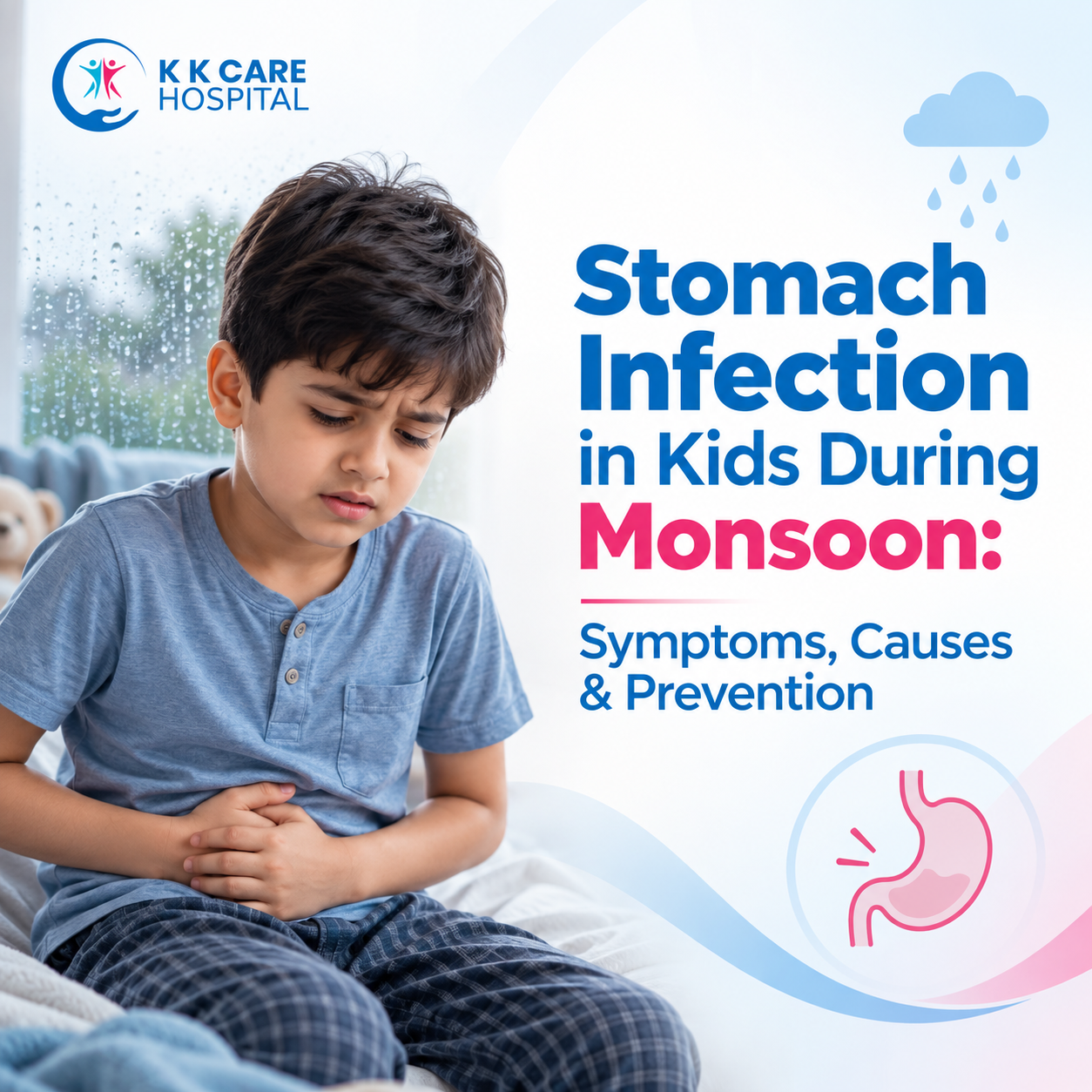
Stomach infection in kids is common during monsoon. Contaminated food, unsafe water and dirty hands give germs an easy way in, and children pick them up faster than adults do. Vomiting, diarrhoea, stomach pain, fever and loss of appetite are the usual first signs. Catching them early is what keeps a mild bug from turning into a dehydration problem.
Common Diseases in the Rainy Season
Rain itself doesn’t make a child sick. It’s what comes with it — standing water, contaminated food, crowded mosquito breeding spots — that raises the risk. During monsoon, children are more exposed to:
- Stomach infections and diarrhoea
- Viral infections
- Dengue
- Malaria
- Typhoid
- Colds and coughs
How much risk your child faces depends on food and water safety, hygiene at home, and how much standing water collects nearby. For a wider look at what to watch for this season, see our guide to rainy season diseases and how to prevent them.
What Causes Stomach Infection in Kids
A stomach infection usually comes down to germs getting into the body through food, water, hands or surfaces.
- Contaminated food: Germs can get into food during cooking, handling or storage. Eating it brings on vomiting, diarrhoea and stomach pain.
- Unsafe water: Drinking contaminated water, or cooking with it, is one of the fastest ways a stomach bug spreads. Stick to safe drinking water for your child, always.
- Poor hand hygiene: Kids eat with their hands and touch their faces constantly. If those hands haven’t been washed after the toilet or after playing outside, germs go straight in. Make handwashing with soap a non-negotiable before meals.
- Contact with an infected person: Some stomach infections spread from child to child through shared hands, surfaces or close contact, especially in school or daycare settings.
Stomach Infection Symptoms in Children
Symptoms of stomach infection vary from child to child, and your child may only show a few of them. Common ones include:
- Stomach pain or cramps
- Vomiting
- Loose or watery stools
- Diarrhoea
- Fever
- Nausea
- Loss of appetite
- Tiredness or weakness
If vomiting or diarrhoea sticks around, dehydration is the next thing to watch for.
Signs of Dehydration in Children
Vomiting and diarrhoea drain fluids fast, and younger children dehydrate quicker than older ones. Watch for:
- Dry mouth or tongue
- Increased thirst
- Passing urine less often, or very little urine
- Sunken eyes
- Unusual tiredness or sleepiness
- Weakness
- Difficulty drinking fluids
If your child can’t keep fluids down, seems unusually sleepy, or shows any of these signs clearly, get medical care right away rather than waiting it out.
Monsoon Fever in Children
“Monsoon fever” isn’t one specific illness — it’s just a general term for fever during the rainy season. The cause behind it can vary a lot, and fever often shows up alongside headache, body aches, tiredness, cough or cold, vomiting, diarrhoea, or stomach discomfort.
Don’t assume every fever this season has the same cause. If it continues, gets severe, or your child seems unwell in other ways, get it checked rather than waiting to see if it passes.
How to Prevent Monsoon Diseases in Kids
Prevention of monsoon diseases comes down to a handful of hygiene and food-safety habits, done consistently.
- Wash hands regularly: Before eating, after the toilet, before handling food, after playing outdoors. Help younger children do this properly rather than assuming they will on their own.
- Give safe drinking water: Clean water for drinking and for cooking, milk or any other drink you prepare at home.
- Serve fresh, well-cooked food: Cook food properly, keep it covered, and store it safely. Skip anything that’s been left uncovered or exposed to insects and dust.
- Keep the kitchen clean: Clean surfaces and utensils regularly, and keep raw and cooked food apart.
- Wash fruits and vegetables: Rinse thoroughly with safe water before serving, and peel where it makes sense.
- Maintain clean surroundings: Keep bathrooms, kitchens and commonly touched surfaces clean, and dispose of household waste properly.
- Prevent mosquito breeding: Empty standing water from pots, containers, coolers and tyres regularly, and use mosquito-bite protection for your child.
- Keep children hydrated: Especially when they’re unwell. If your child has diarrhoea or vomiting, ask a healthcare professional about oral rehydration solution (ORS).
What to Do If Your Child Has Vomiting or Diarrhoea
- Offer fluids frequently, as tolerated
- Follow medical advice on ORS
- Continue age-appropriate food unless a doctor says otherwise
- Track how often your child passes urine
- Watch for the dehydration signs above
- Get medical advice if symptoms are severe, persistent or getting worse
- Don’t give medicines for vomiting or diarrhoea without a doctor’s advice, especially for young children
When to See a Doctor for Your Child’s Stomach Infection
Get medical advice if your child has repeated or persistent vomiting, frequent or ongoing diarrhoea, or blood in the stool. Severe or worsening stomach pain and a persistent or high fever are also reasons to get them checked, as is difficulty drinking fluids, passing very little urine, unusual sleepiness, significant weakness, or breathing difficulty. If symptoms are simply getting worse rather than improving, don’t wait it out. If your child is difficult to wake, can’t drink, or shows severe signs of dehydration, treat it as urgent.
For ongoing or severe symptoms, you can consult Dr. Rajan Chauhan, a pediatrician in Charholi at KK Care Hospital, with over 10 years of experience treating children.
Frequently Asked Questions
Q: What are the first signs of stomach infection in kids?
A: Early signs include stomach pain, vomiting, loose stools, diarrhoea, fever, nausea, poor appetite and tiredness.
Q: What are the symptoms of stomach infection in children?
A: Common stomach infection symptoms are stomach pain, vomiting, diarrhoea, fever, loss of appetite and weakness or tiredness.
Q: Can contaminated food or water cause stomach infection?
A: Yes. Contaminated food or water carries germs that cause stomach infections. Safe water, clean food and regular handwashing lower the risk.
Q:How can I prevent stomach infection during monsoon?
A: Give children safe drinking water, fresh and properly cooked food, and encourage regular handwashing. Keep the kitchen and home clean, and avoid food that may be contaminated.
Q: Is monsoon fever a specific disease?
A: No. Monsoon fever is a general term for fever during the rainy season. The cause varies, so other symptoms and your child’s overall condition matter too.
Q: When should I take my child to a doctor for vomiting or diarrhoea?
A: If it’s persistent or severe, there’s blood in the stool, your child has severe stomach pain or fever, can’t drink fluids, passes very little urine, becomes unusually sleepy, or shows signs of dehydration.