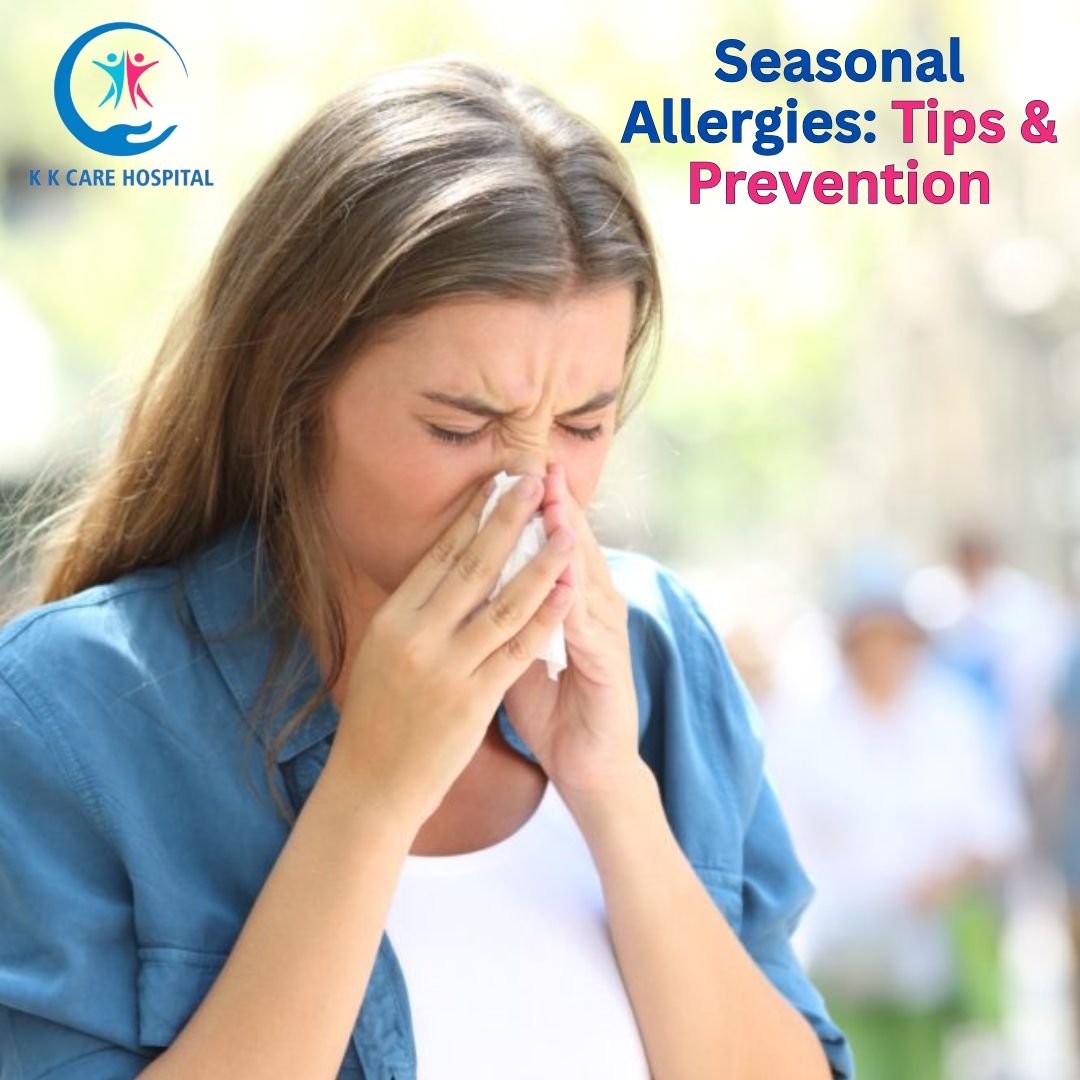
Understanding Seasonal Allergies
Seasonal allergies, often known as hay fever or allergic rhinitis, occur when your immune system reacts to airborne substances such as pollen, mold spores, or dust mites. These allergens are most prevalent during certain times of the year—typically spring, summer, and fall—when plants release pollen into the air.
At KK Care Hospital, Charholi, Pimpri-Chinchwad, our specialists frequently treat patients suffering from sneezing, nasal congestion, itchy eyes, and coughing—classic signs of seasonal allergies. Understanding what triggers your allergies is the first step toward managing and preventing them effectively.
🌿 Common Causes of Seasonal Allergies
Seasonal allergies can occur due to different types of allergens depending on the season. Here’s a quick overview:
- Spring: Tree pollens (oak, birch, and maple) are the main triggers.
- Summer: Grass pollens like Bermuda and Timothy grass dominate.
- Monsoon: Mold spores increase due to damp conditions.
- Autumn/Winter: Weed pollens and indoor allergens (dust mites, pet dander) are more common.
Even though you can’t control the weather, you can control your exposure and build preventive habits to minimize allergic reactions.
🤧 Common Symptoms of Seasonal Allergies
Seasonal allergies often mimic the symptoms of a common cold, which makes diagnosis tricky without proper medical guidance. Typical symptoms include:
- Sneezing and runny or stuffy nose
- Itchy or watery eyes
- Scratchy throat or coughing
- Headache or sinus pressure
- Fatigue and difficulty concentrating
If your symptoms appear at the same time every year and last for several weeks, chances are they are due to seasonal allergies rather than an infection.
Diagnosis at KK Care Hospital
At KK Care Hospital, our team of physicians and ENT specialists use a combination of medical history, symptom evaluation, and diagnostic tests to identify allergy triggers.
Some of the diagnostic approaches include:
- Skin Prick Test: To detect immediate allergic reactions to common airborne substances.
- Blood Tests (IgE): Measures immune system’s response to allergens.
- Nasal Examination: Helps assess inflammation and rule out infections.
Early diagnosis helps you take control before symptoms become severe or chronic.
🌼 Practical Tips to Prevent Seasonal Allergies
You can’t completely avoid allergens, but you can reduce your exposure by following these simple preventive measures:
- Monitor Pollen Counts
Check daily pollen forecasts and try to stay indoors when counts are high, especially during early mornings and windy days.
- Keep Windows Closed
Keep your home and car windows shut during peak pollen seasons. Use air conditioning with clean filters to maintain fresh indoor air.
- Change Clothes and Shower
After coming indoors, change your clothes and shower to remove pollen from your skin and hair.
- Clean Regularly
Vacuum and dust your home frequently using HEPA filters to minimize allergens like dust mites and pet dander.
- Use a Humidifier or Dehumidifier
Maintain moderate humidity levels indoors. Excess moisture encourages mold growth, while too little can irritate nasal passages.
- Avoid Outdoor Activities During Peak Hours
Try scheduling outdoor exercises in the evening when pollen levels are generally lower.
- Protect Your Eyes and Face
Wearing sunglasses and masks can help prevent direct exposure to allergens when outdoors.
💊 Treatment Options for Seasonal Allergies
If preventive steps aren’t enough, several treatment options can help control your symptoms:
- Antihistamines
These medications reduce sneezing, itching, and runny nose by blocking histamine—a chemical released during allergic reactions.
- Nasal Corticosteroids
They help reduce inflammation and congestion in nasal passages, providing long-term relief.
- Decongestants
Used for short-term relief, these help reduce nasal blockage but should not be used continuously.
- Eye Drops
Relieve itchy, watery, and red eyes caused by allergic reactions.
- Immunotherapy (Allergy Shots)
For severe or recurring allergies, immunotherapy can help desensitize your immune system to specific allergens over time.
Our specialists at KK Care Hospital, Pimpri-Chinchwad, create personalized treatment plans to ensure maximum relief with minimal side effects.
🍃 Home Remedies and Lifestyle Tips
Alongside medical treatment, some simple home remedies can also help ease discomfort:
- Steam Inhalation: Helps clear nasal passages and reduce congestion.
- Saline Nasal Rinse: Washes away allergens from nasal membranes.
- Balanced Diet: Include foods rich in Vitamin C and Omega-3 fatty acids to strengthen immunity.
- Stay Hydrated: Drinking plenty of fluids helps thin mucus and keeps your airways moist.
These natural remedies can be highly effective when used with medical treatment.
🧘♀️ Managing Allergies for a Healthier Lifestyle
Seasonal allergies can be managed effectively with the right blend of medical care, prevention, and lifestyle adjustments. Early recognition of symptoms, timely diagnosis, and consistent follow-up with your doctor are key to living symptom-free.
If you experience persistent allergy symptoms or your condition worsens over time, consult the experienced doctors at KK Care Hospital, Charholi, Pimpri-Chinchwad. Our team provides evidence-based allergy management plans tailored to your needs—helping you breathe easier and enjoy every season without worry.
🏥 Why Choose KK Care Hospital?
- Expert team of ENT and general medicine specialists
- Accurate allergy testing and modern diagnostic tools
- Personalized, evidence-based treatment plans
- Patient-centric approach with continuous follow-up care
📍 Visit Us
KK Care Hospital – Your trusted partner for comprehensive healthcare in Charholi, PCMC.
To schedule a consultation or learn more about allergy prevention and treatment, visit:
👉 https://kkcarehospital.com/seasonal-allergies-tips-and-prevention/