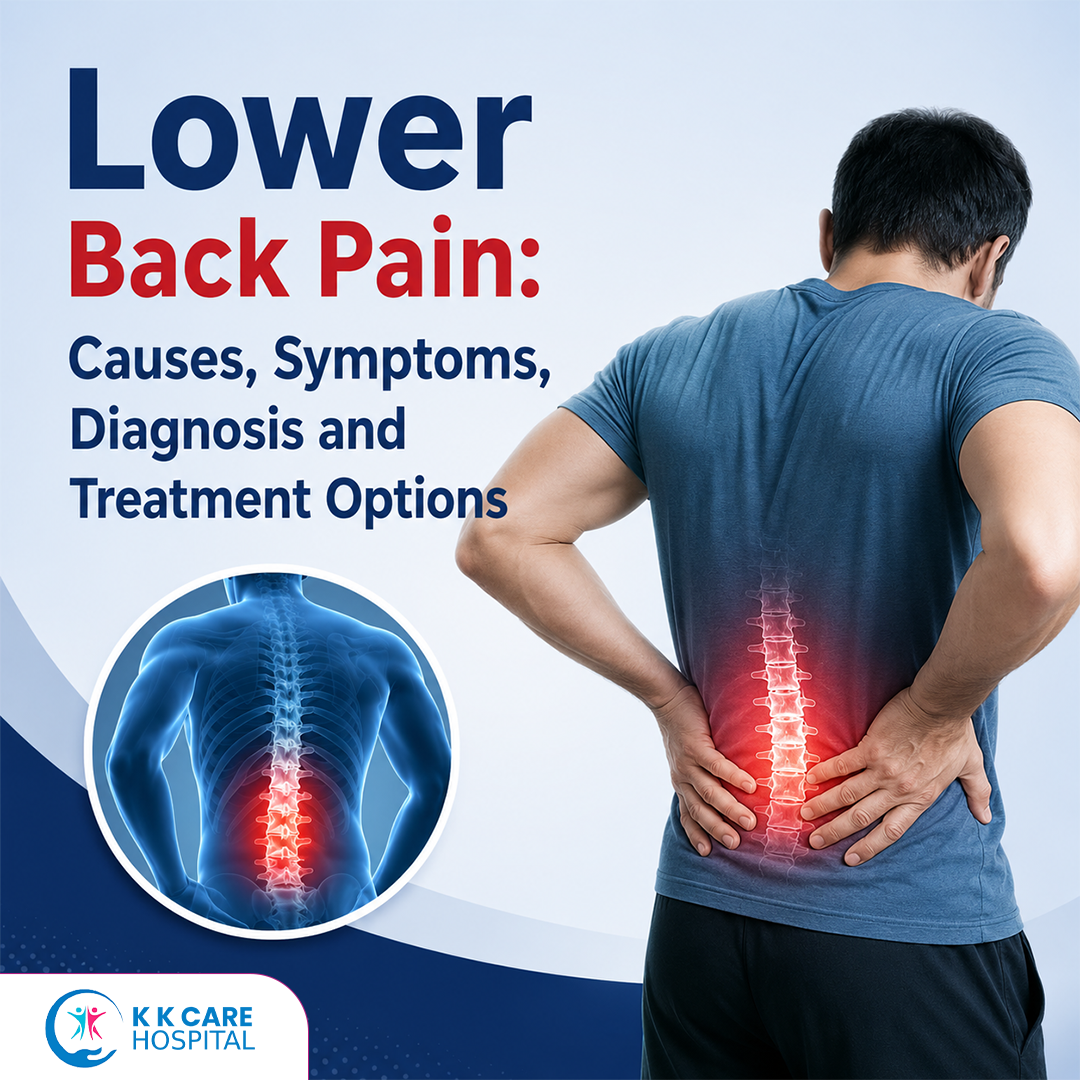
Lower back pain is one of the most common reasons people visit a doctor, affecting nearly 8 in 10 adults at some point in their lives. It can range from a dull, nagging ache after a long day at your desk to sharp pain that makes it hard to stand up straight. So what causes lower back pain in the first place? At KK Care Hospital in Charholi, PCMC, our orthopedic and spine team sees patients with every kind of lower back pain daily, and early diagnosis makes all the difference to recovery time.
Lower Back Pain Causes and Reasons
There are several reasons behind lower back pain, and identifying the trigger is the first step toward the right treatment.
Mechanical and lifestyle causes
- Poor posture while sitting or standing for long hours
- Lifting heavy objects with incorrect technique
- Weak core and back muscles
- Sudden awkward movements or overstretching
- Being overweight, which adds extra load on the spine
Medical and structural causes
- Herniated or slipped disc pressing on nearby nerves
- Degenerative disc disease from natural wear and tear
- Spinal stenosis, or narrowing of the spinal canal
- Sciatica, where pain radiates down one leg
- Osteoarthritis or spondylosis of the spine
- Muscle spasms or ligament strain
Many of these structural causes fall under the care of our Spine Surgery and Orthopedics departments, who can assess whether a disc or nerve issue is behind your pain.
In some cases, pain in the lower back can also stem from kidney issues, infections, or referred pain from other organs, which is why persistent pain should never be ignored.
Common Symptoms of Lower Back Pain
Lower back pain symptoms vary depending on the underlying cause, but the most commonly reported ones include:
- A dull, aching sensation in the lower back
- Sharp, stabbing pain during movement
- Stiffness that limits your range of motion
- Pain that radiates to the hips, buttocks, or down one leg
- Numbness or tingling in the legs or feet
- Muscle spasms that make it difficult to stand upright
- Pain that worsens after sitting or standing for long periods
If you notice numbness, loss of bladder or bowel control, or pain following an injury, these are red flags that need immediate medical attention.
How Is Lower Back Pain Diagnosed
Diagnosis usually starts with a physical examination and a detailed history of your symptoms, lifestyle, and any prior injuries. Our doctors check posture, range of motion, reflexes, and muscle strength, and depending on the findings, may recommend diagnostic tests like X-rays and MRI at our in-house diagnostic center:
- X-rays to check for fractures or alignment issues
- MRI scans to assess discs, nerves, and soft tissue
- CT scans for detailed bone imaging
- Blood tests to rule out infections or inflammatory conditions
Lower Back Pain Treatment Options
Most cases of lower back pain improve with conservative treatment, and surgery is usually the last resort. The right lower back pain treatment plan depends on the cause, severity, and how long the pain has persisted, so a proper diagnosis is essential before starting any treatment.
- Rest and activity modification for the first 24-48 hours, followed by gentle movement
- Physiotherapy to strengthen muscles and correct posture
- Medication such as anti-inflammatories or muscle relaxants
- Hot and cold therapy to reduce inflammation and ease stiffness
- Spinal injections, offered through our pain management clinic, for targeted, longer-lasting relief
- Non-surgical pain treatment through our Ortho Renew Clinic for chronic cases that don’t respond to standard care
- Surgical treatment from an orthopedic specialist or spine surgeon in Charholi for severe disc or nerve-related issues
Lower Back Pain Exercise Routines for Relief
Targeted lower back pain exercise routines can ease discomfort and prevent recurrence when done correctly and consistently.
- Pelvic tilts to gently strengthen the lower abdominal muscles
- Cat-cow stretch to improve spinal flexibility
- Bridges to build glute and lower back strength
- Knee-to-chest stretch to relieve tension in the lower spine
- Bird dog exercise to improve core stability and balance
Always start slow, avoid any movement that sharply increases pain, and consult our physiotherapy and rehabilitation team before beginning a new exercise routine if your pain is severe or persistent.
When to See a Doctor
Seek medical attention if your lower back pain lasts more than a few weeks, worsens over time, follows an injury, or comes with numbness, weakness, fever, or unexplained weight loss. Early diagnosis prevents minor issues from turning into chronic conditions.
Still Living With Lower Back Pain
Don’t let it become a chronic problem. Book an appointment with our orthopedic and spine specialists at KK Care Hospital, Charholi, and get a personalised diagnosis and treatment plan tailored to your condition.
Frequently Asked Questions
Q: What causes lower back pain?
Lower back pain is most often caused by muscle strain, poor posture, or disc-related issues, though it can also result from arthritis, nerve compression, or underlying medical conditions.
Q: What are the common reasons for lower back pain in young adults?
Sedentary lifestyles, long hours at a desk, weak core muscles, and improper lifting technique are among the leading reasons for lower back pain in younger people.
Q: What are the most common causes of pain in the lower back?
Muscle or ligament strain, poor posture, and disc-related issues are the most frequent pain in lower back causes, though structural conditions like spinal stenosis or sciatica can also be responsible.
Q: Can exercise help with lower back pain?
Yes. Targeted lower back pain exercises that strengthen the core and improve flexibility can relieve pain and lower the risk of it returning, when done under proper guidance.
Q: Is lower back pain treatment different for a slipped disc versus muscle strain?
Yes. Muscle strain typically responds to rest, physiotherapy, and medication, while a slipped disc may need targeted injections, advanced physiotherapy, or surgery depending on severity.
Q: When should I worry about pain in my lower back?
See a doctor promptly if the pain is severe, doesn’t improve after a couple of weeks, follows a fall or accident, or comes with numbness, tingling, or bladder/bowel changes.