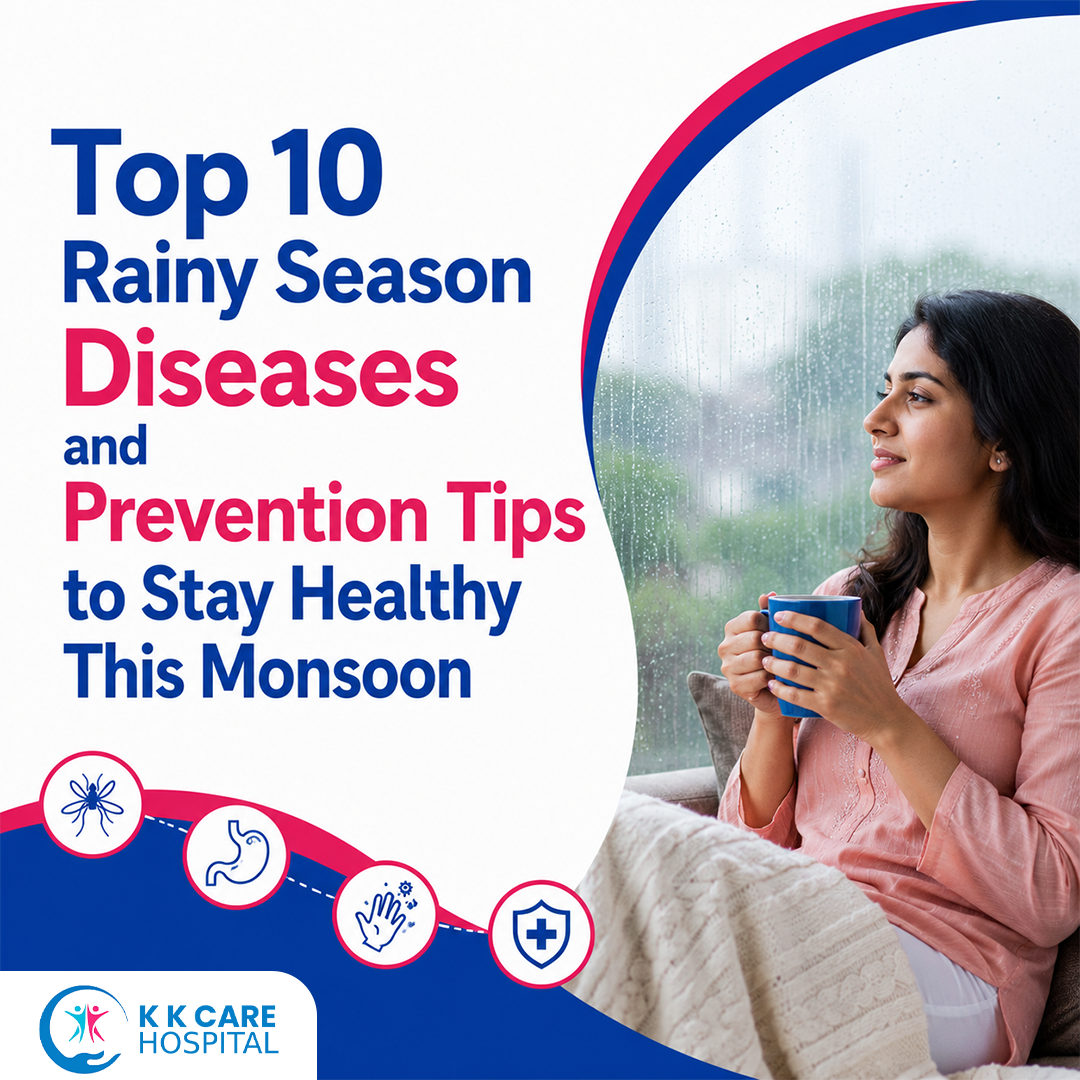
Every monsoon, the same pattern plays out. Fever clinics fill up. Parents rush in with sick children. Adults who ignored a two-day fever arrive with complications that could have been caught early.
Most of these cases are preventable. All of them are treatable — if you act fast.
Here’s what to watch for this monsoon, and what to do about it.
The 10 Most Common Rainy Season Diseases
Stagnant water, high humidity, and weakened immunity create the perfect conditions for infection. These are the rainy season diseases that cause the most hospital visits every year — from June through September.
- Dengue Fever
Spread by Aedes mosquitoes breeding in clean stagnant water — a flower tray, a clogged drain, even a bottle cap. Symptoms: high fever, severe joint pain, and rash. Platelet counts can fall fast. Our general physician in Charholi recommends getting tested at the first sign of fever, not after two days of paracetamol. - Malaria
Cyclic fever, chills, headache, and body ache — especially common in waterlogged pockets around Moshi, Charholi, and Alandi. A simple blood test distinguishes malaria from dengue. Don’t guess. - Typhoid
One of the most widespread diseases during rainy season in India. Contaminated food and water spread typhoid bacteria rapidly. Watch for sustained high fever, weakness, and abdominal pain. Requires proper antibiotic treatment — self-medication makes it worse. - Leptospirosis
One of the most underdiagnosed monsoon diseases. Contracted by wading through floodwater contaminated with animal urine — common in low-lying areas during heavy rains. Frequently mistaken for viral fever until it progresses to kidney or liver complications. - Cholera
Severe watery diarrhea and vomiting from contaminated water. Dehydration escalates quickly, particularly in children and the elderly. Our gastroenterology team handles acute GI infections with same-day OPD access — ORS alone isn’t enough if symptoms are severe. - Viral Fever
The single most common disease in rainy season. Sudden fever, fatigue, and body ache — usually self-limiting, but any fever lasting beyond 48 hours needs evaluation. Don’t wait it out. - Cold, Flu, and Respiratory Infections
Temperature swings and humidity lower immunity and drive upper respiratory infections through schools, offices, and public transport. Persistent or worsening symptoms should be evaluated by our ENT specialist in Charholi — especially if there’s breathlessness or chest discomfort. - Gastroenteritis
Nausea, vomiting, and loose motions from contaminated food or water. Most cases settle with ORS and rest. Blood in stool or persistent vomiting are red flags — come in immediately. - Fungal Skin Infections
Wet skin plus damp clothing plus poor ventilation equals ringworm, athlete’s foot, and jock itch. Keep skin dry, change wet clothes promptly, and use antifungal powder in skin folds. Untreated fungal infections spread fast in monsoon conditions. - Conjunctivitis (Eye Flu)
Highly contagious. Spreads through direct contact and shared items. Symptoms: red, watery, itchy eyes with discharge. Our ophthalmology department offers quick diagnosis and treatment — avoid touching your face and don’t share towels.
Rainy Season Diseases and Prevention: What Actually Works
Understanding rainy season diseases and prevention isn’t complicated — most monsoon illnesses share the same exposure routes. These steps cut your risk across almost every disease on this list.
- Drink only boiled or purified water. Waterborne diseases spike when supply lines get contaminated during heavy rains. Don’t rely on what looks clean.
- Avoid street food and raw vegetables. Open food exposed to rain, flies, and stagnant water is one of the leading causes of typhoid and gastroenteritis every monsoon. Cook at home when you can.
- Use mosquito repellent — day and night. Aedes mosquitoes bite during daylight hours, not just at night. Apply repellent on exposed skin, use nets, and eliminate standing water in and around your home every week.
- Dry your feet after getting wet. Clean and dry between toes after rain exposure. Change into dry socks and footwear as soon as possible. This one habit prevents most fungal infections.
- Wash hands frequently. Before meals, after outdoor contact, after using public transport. Still the single most effective way to stop both viral and bacterial spread.
- Support your immunity. Eat seasonal fruit, sleep enough, stay hydrated. If you have diabetes or a heart condition, this season demands extra vigilance and regular check-ins with your specialist.
- Get vaccinated. Typhoid and Hepatitis A vaccines provide strong protection for adults and children. If you’re unsure when you or your family last got vaccinated, ask your doctor before the monsoon peaks.
- Watch for breathing changes. Monsoon air is a known trigger for asthma flare-ups and allergic reactions. Wheezing, breathlessness, or a persistent cough needs prompt evaluation at our Asthma & Allergy Clinic or with our pulmonologist in Charholi.
How to Avoid Viral Infection This Monsoon
Knowing how to avoid viral infection during the rainy season comes down to a few non-negotiables: clean water, clean food, hand hygiene, and not ignoring a fever that doesn’t break in 48 hours. Most people who end up in hospital with complications waited too long — either self-medicating or assuming it would pass.
If symptoms persist beyond two days, or if you notice rash, joint pain, vomiting, or blood in stool, visit a doctor. Early testing makes the difference between a two-day recovery and a week’s admission.
Our diagnostic centre in Charholi runs same-day blood panels, dengue NS1 antigen tests, malaria cards, and urine cultures — so you’re not guessing.
When to Go to the Hospital Immediately
Some symptoms can’t wait for an appointment tomorrow.
Go immediately if you notice:
- Fever above 103°F lasting more than 48 hours
- Blood in stool or urine
- Severe vomiting with inability to keep fluids down
- Sudden drop in urine output
- Confusion, breathlessness, or loss of consciousness
Monsoon disease escalates fastest in children under 10, adults over 60, and anyone managing a chronic condition. Our paediatrician in Charholi recommends extra caution for kids during peak monsoon months — July and August especially. When in doubt, come in.
Same-Day Care for Monsoon Illness — KK Care Hospital, Charholi
KK Care Hospital offers same-day OPD consultations for fever, infections, and all rainy season diseases and prevention needs — with in-house diagnostics and specialist care under one roof.
Dengue NS1 antigen tests, malaria cards, urine cultures, and full blood panels — results the same day, so you’re not guessing.
No long waits. No referral delays. Fast, accurate diagnosis when it matters most.
Book an appointment — or walk in to our Charholi or Alandi centre.
FAQs:
Q: Which monsoon disease is most dangerous?
A: Dengue and leptospirosis — because both are routinely mistaken for common viral fever until complications develop. If fever doesn’t resolve in 48 hours, get a blood test done at our diagnostic centre.
Q: How do I avoid catching viral infections during rainy season?
A: Clean water, clean food, hand washing, mosquito repellent (including during daylight), and early medical attention if fever persists beyond two days. Don’t wait for it to “pass on its own.”
Q: Are children more at risk during monsoon?
A: Yes. Developing immune systems make children more susceptible to dengue, typhoid, and gastroenteritis — common rainy season diseases that escalate quickly in young patients. Our paediatric team at KK Care Hospital provides dedicated monsoon care for infants, toddlers, and school-age children.
Q: Can I get dengue even without stagnant water near my home?
A: Yes. Aedes mosquitoes breed in tiny amounts of water — a plant tray, a clogged AC drain, an upturned lid. Check every corner of your home weekly through September.
Q: When should I visit a hospital for monsoon fever?
A: Any fever lasting more than 48 hours — especially with joint pain, rash, vomiting, or loose motions — needs in-person evaluation and a blood panel. Paracetamol manages the symptom, not the cause.